A few weeks ago, I wrote about the heartbreak of watching my favorite sustainable brands close their doors. Since then, I’ve been paying closer attention to the ones that didn’t.
The ones that aren’t shouting about being “eco.”
And here’s what I noticed: Survival in sustainable fashion doesn’t come from slogans. It comes from doing a few things really, really well.
The Rules for Survival
1. Design first. Preach later.
A piece should feel irresistible on its own before you ever mention the word “sustainable.”
Thaely does this beautifully. Their sneakers look sharp, feel sharp, and then oh, by the way they’re made from plastic bags. Sustainability should be a bonus, not a crutch.
2. Nail one thing. Then grow.
You don’t need to fix the entire fashion industry on Day 1.
Pick a lane like organic cotton, small-batch production, or ethical wages, and make it bulletproof. Then expand.
The brands that try to be circular, carbon-neutral, and regenerative on day one? They either burn out or greenwash.
3. Make transparency irresistible.
Transparency isn’t a compliance PDF buried on your website. It’s a story people want to click.
Imagine buying a dress and seeing its journey from farm to dye house to tailor, mapped out like a travel itinerary. That’s not just data, it’s delight. And it’s how trust is built.
4. Turn customers into collaborators.
The best brands don’t just sell. They involve.
They name products after customers, crowdsource new designs, and show the messy parts of their process. That’s how buyers become believers and stick around long after the sale.
5. Outlive the trends.
TikTok virality fades in weeks. A well-made piece lasts years.
The strongest brands repair, resell, and release fewer pieces, not more. They make it a flex to wear something again and again.
If You’re a Shopper…
I’ve been on both sides: feeling inspired, and feeling totally overwhelmed. Here’s what’s helped me shop smarter without burning out:
If it sounds too soothing, question it. Words like “eco-friendly,” “green,” or “natural” don’t mean much without proof. Ask where the evidence is.
Don’t assume it’s all expensive. Some of my best finds are thrifted or secondhand (I use tools like Beni to track resale deals).
Reward effort, not perfection. A brand using organic cotton or paying fair wages is already doing more than most fast fashion giants.
Lean on curators. This is exactly why I’m building Shezaar: to do the vetting for you, so you don’t have to decode every tag or claim.
5 Sustainable Brands Worth Your Attention
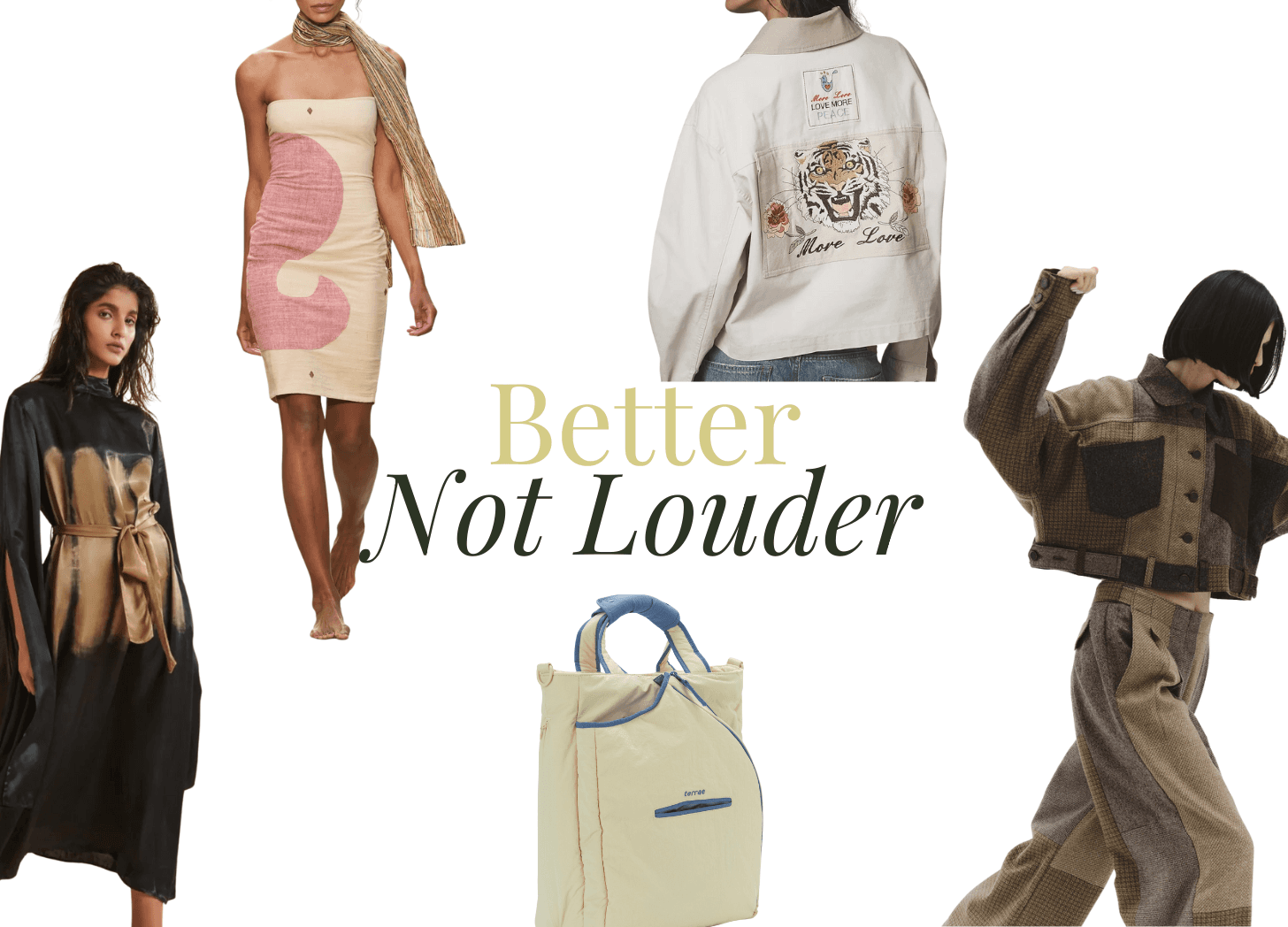
Terrae – They make activewear you actually want to live in. Clean lines, great fit, zero fuss. And then you learn it’s made from recycled plastic bottles and ocean waste nylon. Beautiful first, sustainable second.
Dorabi – They make clothes that feel alive, vibrant, hand-dyed, and full of character. You fall for the colors first, then find out they’re made with natural dyes by generational artisans.
Jiwya – Their pieces have soul, soft, sculptural, and made entirely from plant-based materials. You love them for the design first, then realize they’re built on a zero-waste, soil-to-soil process.
Loti – They make clothes you actually want to reach for, easy, elevated, and full of texture. Only later do you find out they’re made in Lima from deadstock fabrics that would’ve gone to waste.
More Love Love More – Their pieces have this effortless joy, bold, a little chaotic, and completely original. Then you find out many are made from scrap and deadstock fabrics, which somehow makes them even cooler.
Yes, we’re building a tool to make it easier to find brands like these. And we’re almost ready with the beta! Interested in learning more? Sign up to be a beta user here.
Final Thought: Deserve to Stay
The future of sustainable fashion won’t be built on louder eco-claims.
It’ll be built on better products, better stories, and better service.
So whether you’re a brand founder or just someone trying to shop with intention, ask yourself the harder question: Does this brand deserve to stay?
That’s where the real shift begins.